
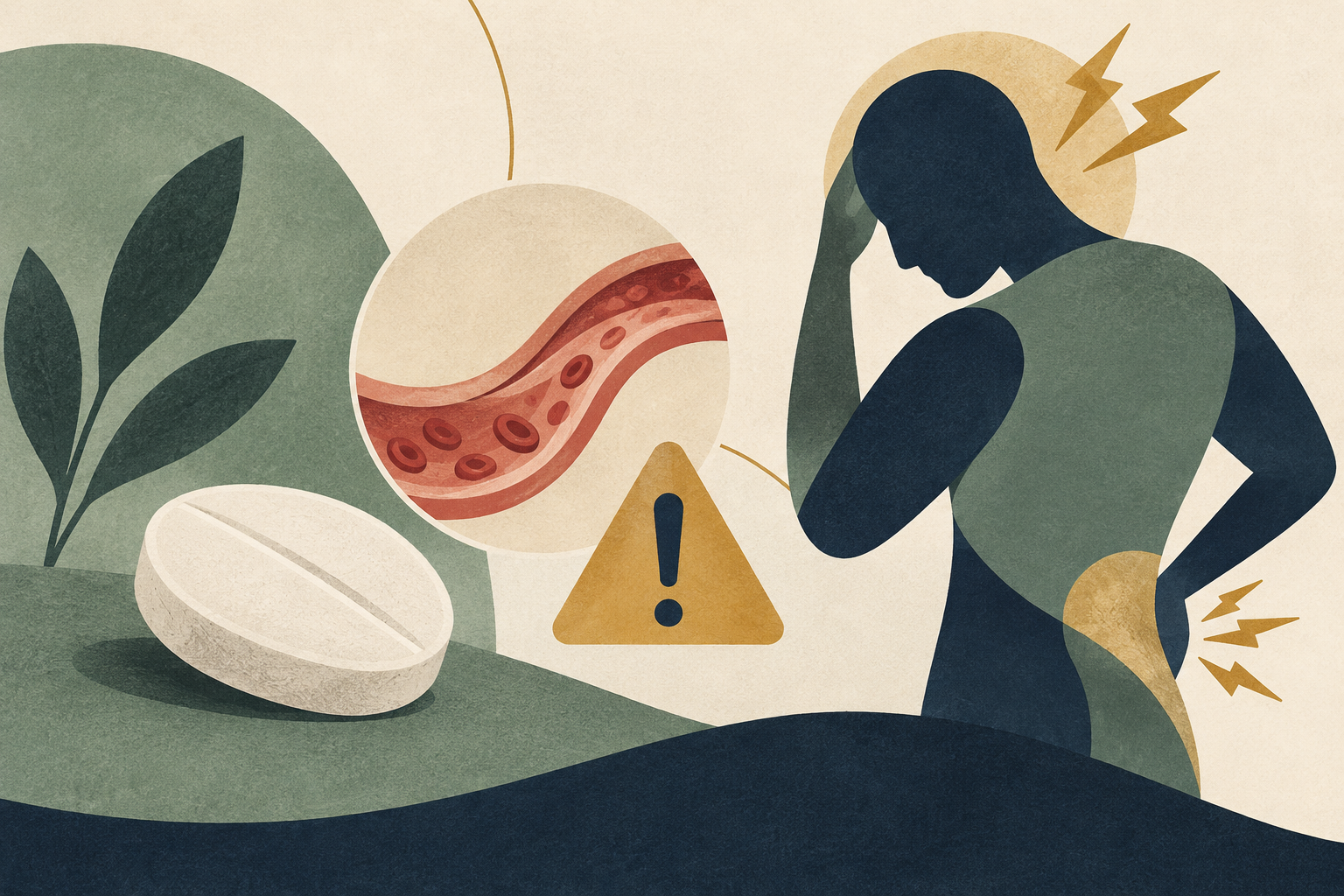
Quick answer: Cialis is the brand name for tadalafil. The effects reported most often include headache, indigestion, back or muscle pain, flushing and a stuffy nose. Many are mild, but chest pain, sudden vision or hearing changes, an allergic reaction, or an erection lasting longer than four hours needs urgent attention. The medicine also has important interactions—especially with nitrate medicines and “poppers”—so a medication review matters more than trying to manage a reaction alone.
- Common effects do not automatically mean an emergency, but new, severe or persistent symptoms deserve a call to the prescriber.
- Do not combine tadalafil with nitrates or riociguat; tell emergency clinicians when you last took it.
- Do not take an extra dose or stop another prescribed medicine to compensate without professional advice.
What tadalafil does—and what it does not do
Tadalafil is a phosphodiesterase-5 (PDE5) inhibitor. For erectile dysfunction, it helps blood flow in response to sexual stimulation; it does not create desire or produce an automatic erection. It is also prescribed for other conditions, including benign prostatic hyperplasia and pulmonary arterial hypertension, under different treatment plans. That distinction matters: the dose, schedule and monitoring are not interchangeable between people or indications.
People often search for side effects after starting, changing a dose or combining it with another medicine. The safest interpretation begins with the exact product, dose and schedule on the prescription label. If you are unsure whether a symptom is from tadalafil, a clinician or pharmacist can review timing, other medicines and underlying conditions. Do not use another person’s tablets or an old prescription to test what happens.
Common effects: what the pattern can look like
Official prescribing information lists headache, indigestion, back pain, muscle aches, flushing and nasal congestion among the more common adverse reactions. The likelihood can vary by dose, how often it is taken and the reason it was prescribed. Some people notice symptoms after a dose; others may not have any troublesome effects. A symptom’s presence alone cannot identify its cause.
Back or muscle discomfort can feel different from a strain after exercise. Note when it began, where it is, how intense it feels and whether it is improving. Indigestion may overlap with food-related discomfort or other medicines. Avoid assuming that every new ache is “just the drug,” especially if it is severe, persistent, accompanied by weakness or occurs with chest symptoms.
| What you notice | Useful next step |
|---|---|
| Headache, flushing or stuffy nose | Record timing and severity; ask the prescriber or pharmacist if it is bothersome or recurring. |
| Indigestion | Review the product directions and other medicines; seek advice if severe or persistent. |
| Back or muscle pain | Track onset and course; get medical advice for marked, worsening or unusual pain. |
| Dizziness or faintness | Sit or lie down safely and contact a clinician; fainting, chest pain or severe symptoms need urgent assessment. |
Symptoms that should not wait
An erection lasting more than four hours is a medical emergency. It can damage tissue if treatment is delayed, even if it is not very painful. Go to emergency care rather than waiting for it to resolve or trying home remedies.
Sudden loss or major change in vision or hearing is also a reason to stop and seek urgent medical assessment. These events are uncommon, and a clinician needs to evaluate possible causes; do not try to diagnose the event from a search result. Swelling of the face, lips or throat, trouble breathing, or a rapidly spreading severe reaction can indicate an emergency allergic response—call local emergency services.
If chest pain occurs during sexual activity or at another time, seek emergency care. Tell responders that tadalafil was taken and when, if known. Do not take nitroglycerin or another nitrate on your own after tadalafil: the combination can cause a dangerous drop in blood pressure. The timing of a nitrate in a life-threatening situation is a clinician’s decision, not a do-it-yourself waiting rule. Never conceal tadalafil use from emergency staff.
Interactions that deserve a medication check
Nitrates used for chest pain—including nitroglycerin and isosorbide—and recreational nitrite products known as “poppers” can interact dangerously with tadalafil. Riociguat is another medicine that should not be combined with it. Some alpha blockers, blood-pressure medicines and substantial alcohol use may increase dizziness or low blood pressure. Certain antifungals, antibiotics, HIV medicines and other drugs can change tadalafil exposure. A pharmacist can check the full list, including supplements and nonprescription products.
Bring a current medication list to appointments. Include the active ingredient when a brand name is unclear, the strength, how often you take it and any recent changes. If you have heart or blood-vessel disease, kidney or liver problems, or have been told to avoid sexual activity for health reasons, the prescriber should know before treatment continues. Do not abruptly stop a heart medicine to make tadalafil “safer.”
A practical plan if an effect appears
- Check the label and write down the dose and time taken. Do not take an extra tablet because the first seemed ineffective.
- Describe the symptom precisely: start time, severity, duration, other symptoms and whether it is getting better.
- Check for urgent warning signs above. If present, use emergency care and disclose tadalafil use.
- For a nonurgent but troublesome effect, contact the prescriber or pharmacist before the next dose if you are uncertain what to do.
- Ask whether your dose, schedule, another medicine or a different cause needs review. Treatment decisions depend on your history—not only a symptom checklist.
For context on a related question, see our guide to how sildenafil’s time window is explained; the medicines are related but are not identical, and one person’s schedule should not be copied by another.
Questions people commonly ask
Do side effects mean the dose is too high?
Not necessarily. Effects can occur at prescribed doses, and the right interpretation depends on the medicine’s purpose, other conditions and interactions. Do not reduce or increase the dose without asking the prescriber.
Can I take an over-the-counter pain reliever?
That depends on your health history and other medicines. Some pain relievers are unsuitable for people with kidney disease, ulcers, blood thinners or certain cardiovascular risks. Ask a pharmacist what is appropriate for you rather than treating a new symptom blindly.
Should I stop Cialis if I feel unwell?
For emergency symptoms, get urgent care and tell clinicians what you took. For nonurgent symptoms, contact the prescribing clinician for individualized instructions. Do not change medicines prescribed for another condition on your own.
What to bring to a clinician conversation
Have the package or a photo of its label, the dose and schedule, the time of the last dose, a full medication and supplement list, and a short symptom timeline. Ask: “Could this be related to tadalafil or an interaction?”, “Which symptoms mean emergency care for me?”, and “Should I change anything before the next dose?” Clear facts help the clinician decide whether monitoring, a medication change or evaluation for another cause is appropriate.
This article is general health information, not a diagnosis or a substitute for individual care. For severe symptoms, use emergency services. For treatment questions, rely on the clinician who knows your medical history and the official instructions for your specific product.