
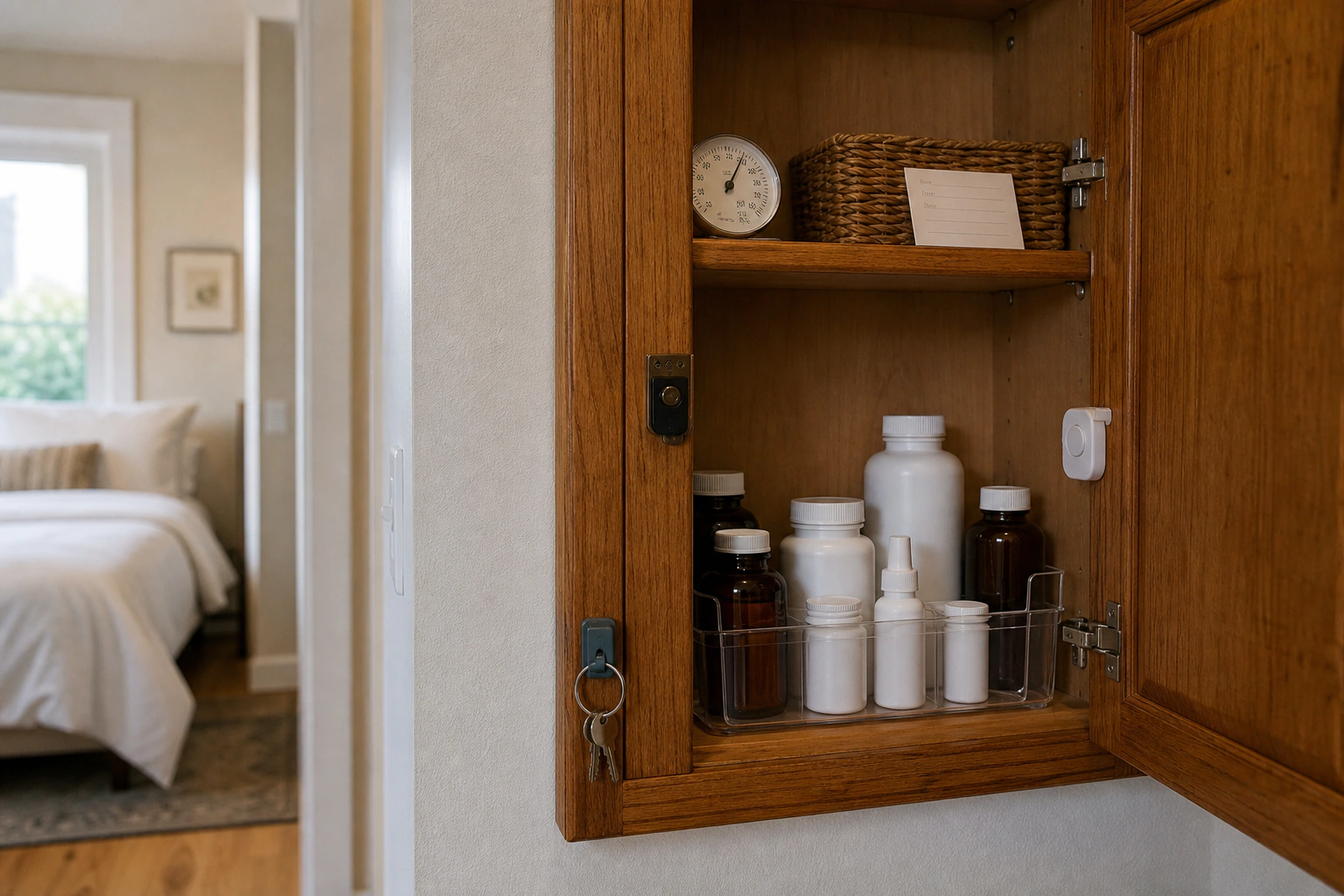
An expiration date answers a narrow question: how long the manufacturer supports the medicine’s quality when it remains in its approved packaging and is stored under labeled conditions. It does not turn every tablet toxic at midnight, but it also does not guarantee that a heat-damaged, damp, opened, or repackaged product is reliable before that date.
The decision is about quality, not appearance alone
Medicines can lose strength, change physically, or become contaminated without an obvious smell or color change. Liquids, eye drops, injections, biologic products, compounded preparations, and products requiring refrigeration may be especially sensitive to handling and time after opening. A dry tablet in an intact blister is a different quality problem from a reconstituted antibiotic liquid left in a hot car.
The FDA advises consumers not to use expired medicines. Stockpile-extension data do not translate into permission for home supplies: government programs test selected, unopened products stored under controlled conditions. Your bathroom cabinet, backpack, pill organizer, or glove box has a different history.
Four dates people confuse
- Manufacturer expiration: supported shelf life in the original approved package and conditions.
- Beyond-use date: a shorter date assigned after compounding or repackaging.
- Discard-after-opening date: the usable period after a bottle, vial, pen, inhaler, or drop container is first opened.
- Prescription “discard after” label: a pharmacy date that may reflect repackaging, stability, or local rules.
A home storage audit, room by room
Bathroom
Heat and humidity change rapidly around showers and sinks. Despite the familiar “medicine cabinet” name, a cool, dry location outside the bathroom is often better unless the label requires something else.
Kitchen
A high cabinet may protect children, but steam, the sink, dishwasher, oven, and stove create moisture and temperature swings. Choose a dry cabinet away from appliances and food-preparation contamination. Lock medicines when children, visitors, or vulnerable adults could reach them.
Car, luggage, and delivery box
Cars can become far hotter or colder than the air outside. Do not store routine supplies in the glove box. When traveling, keep medicines in carry-on luggage in original labeled containers and plan for refrigeration or security screening. A package left on a porch in extreme weather may need assessment by the dispensing pharmacy or manufacturer.
Refrigerator
“Refrigerate” does not mean “freeze.” Avoid the freezer compartment and surfaces prone to freezing. Store away from spills and food, follow the labeled range, and use a plan for power outages. Do not move a room-temperature product into the refrigerator unless instructions permit it; condensation can be harmful.
| What happened? | Do not assume | Useful information for the pharmacist |
|---|---|---|
| Left in a hot car | Cooling it restores quality | Maximum likely temperature, duration, package, product |
| Refrigerated product froze | Thawing makes it usable | Whether fully frozen, duration, appearance, lot if available |
| Tablets became damp or crumbly | Drying them reverses the damage | Original container, desiccant, humidity exposure |
| Liquid changed color or separated | Shaking is always enough | Opening date, storage, odor, seal, instructions |
| Label is unreadable | Appearance identifies the medicine | Pharmacy, prescription record, imprint, original receipt |
Keep the protective packaging working
Original containers provide identity, instructions, child resistance, light protection, and sometimes a moisture-control desiccant. Do not swallow the desiccant. Do not move it to another bottle or combine old and new supplies. Blister packs can protect individual doses until use.
Pill organizers are useful for adherence, but not every product can be repackaged safely. Ask a pharmacist about moisture-sensitive, light-sensitive, hazardous, or unusually packaged medicines. If you split tablets, follow the storage precautions in Can You Crush, Split, or Chew a Tablet?
Opening the package may start a second clock
Some products have a specific usable period after opening, mixing, removing a protective pouch, or starting a device. Write the opening or mixing date directly where instructions allow. Eye drops and multi-dose liquids can be contaminated by touching the tip. Insulin and biologic injections may have an in-use room-temperature period distinct from unopened refrigerated storage. Inhalers may count actuations rather than reveal remaining medicine by feel.
Never infer these periods from a different brand or strength. Ask the pharmacist to mark the discard date at dispensing when the calculation is easy to forget.
What to do with an expired supply
- Secure it: keep it away from children, pets, and anyone for whom it was not prescribed.
- Arrange continuity: request a refill before discarding a medicine you still need. Do not create an abrupt stop; see withdrawal versus rebound.
- Use take-back: a permanent collection site or authorized mail-back envelope is preferred when available.
- Check the FDA flush list: only certain medicines should be flushed when take-back is unavailable. Do not flush routinely.
- For household trash when permitted: follow official instructions, obscure personal information, and do not crush hazardous medicine.
Questions after temperature exposure
The most helpful question is not “Is it probably fine?” but “Does the manufacturer have stability information for this exact product and excursion?” Give the generic and brand name, strength, dosage form, lot number if visible, storage range on the label, estimated temperature, duration, whether the seal was intact, and any physical change. A pharmacist may contact the manufacturer’s medical information service.
Do not test a questionable medicine by taking a dose and waiting for symptoms. Lack of a symptom cannot confirm potency, sterility, or correct release.
Build a storage system that survives real life
- Choose one locked, cool, dry location for routine medicines.
- Keep a smaller clearly labeled travel kit and return it after each trip.
- Set monthly refill and expiration checks for rescue medicines.
- Keep an updated list separate from the medicine supply.
- Store measuring devices with their matching liquids.
- Keep pet medicines separate from human medicines.
- Do not share prescriptions, even when symptoms appear similar.
When a label is unclear, use the question framework in Medication Side Effects and the broader pharmacy safety guide. Medicines bought from an unverified seller may have unreliable storage and dating before they reach you.
Products that deserve an earlier replacement conversation
Rescue medicines need a margin of safety because the cost of failure is high. Check epinephrine auto-injectors, glucagon, rescue inhalers, seizure rescue products, and nitroglycerin on a recurring schedule. Keep refills aligned so the backup is not older than the item it replaces. A device can also fail because the dose counter is empty, the solution is cloudy, or a protective cap is missing even when the printed date has not passed.
Reconstituted antibiotic liquids often have short storage and discard instructions that begin when water is added. Eye drops can have an after-opening limit because sterility matters. Insulin pens, biologic injections, and some liquid medicines use an “in use” period that may permit room temperature within a defined range. Record that date at first use and do not return a repeatedly warmed product to long-term storage as though the clock reset.
Power outage and emergency-kit planning
Before a storm or outage, ask how refrigerated medicines should be insulated, what temperature monitoring is useful, and where an alternative supply could be obtained. Avoid direct contact with ice packs unless the manufacturer permits it; freezing can damage a product. Keep refrigerator doors closed and record the approximate outage period.
An emergency kit should contain a current medicine list, pharmacy and prescriber contacts, copies of critical prescriptions where lawful, batteries or chargers for devices, and a small labeled travel supply. Rotate the supply before it expires rather than forgetting it for years. Never stockpile antibiotics “just in case,” and never transfer loose tablets into an unmarked bag.
Privacy and safety during disposal
Scratch out or remove personal information from labels before discarding containers, but do not separate a questionable pill from the information needed to identify it before a pharmacist or poison center has advised you. Needles, lancets, and auto-injectors may require an approved sharps container rather than a medicine take-back box.
Keep products in a secure location until disposal day. Mixing medicines into household trash is not appropriate in every jurisdiction or for every hazardous product. Follow local take-back and environmental guidance, and never donate an opened prescription to another person.
One-minute summary
When quality is uncertain, preserve the package, document what happened, and ask before using or discarding it. Replacement is especially important for rescue and time-critical treatment. The absence of visible damage cannot prove potency or sterility, and a printed date cannot compensate for incorrect storage. A small recurring home audit prevents most surprises.
Build a replacement ladder before an emergency
For rescue medicines and other time-critical treatment, decide in advance what happens if the product is expired, damaged, lost, frozen, overheated, or left behind. Record the regular pharmacy, prescriber, after-hours service, insurer or assistance line, and the nearest urgent option. Check refill limits before travel and keep medicines in original labeled packaging. A backup pathway matters more than a crowded home supply: duplicate boxes can quietly age together, while essential devices may have batteries, seals, or components with separate dates. A twice-yearly calendar reminder is usually enough to rotate supplies and prevent an unusable product from becoming the only option during a crisis.
Sources and evidence scope
Key sources are FDA consumer advice on expired medicines and storage, FDA expiration-date questions and answers, and FDA guidance on disposing of unused medicines. Sources were checked August 31, 2026. Product stability is formulation- and packaging-specific, so this guide cannot validate a temperature excursion or extend a printed date.