
A lower number on the scale after taking Lasix (furosemide) may reflect water leaving the body—not body fat disappearing. Sudden weight changes can be important for people treated for heart failure or fluid retention, but they are not a safe reason to change a dose or use a diuretic for weight loss.
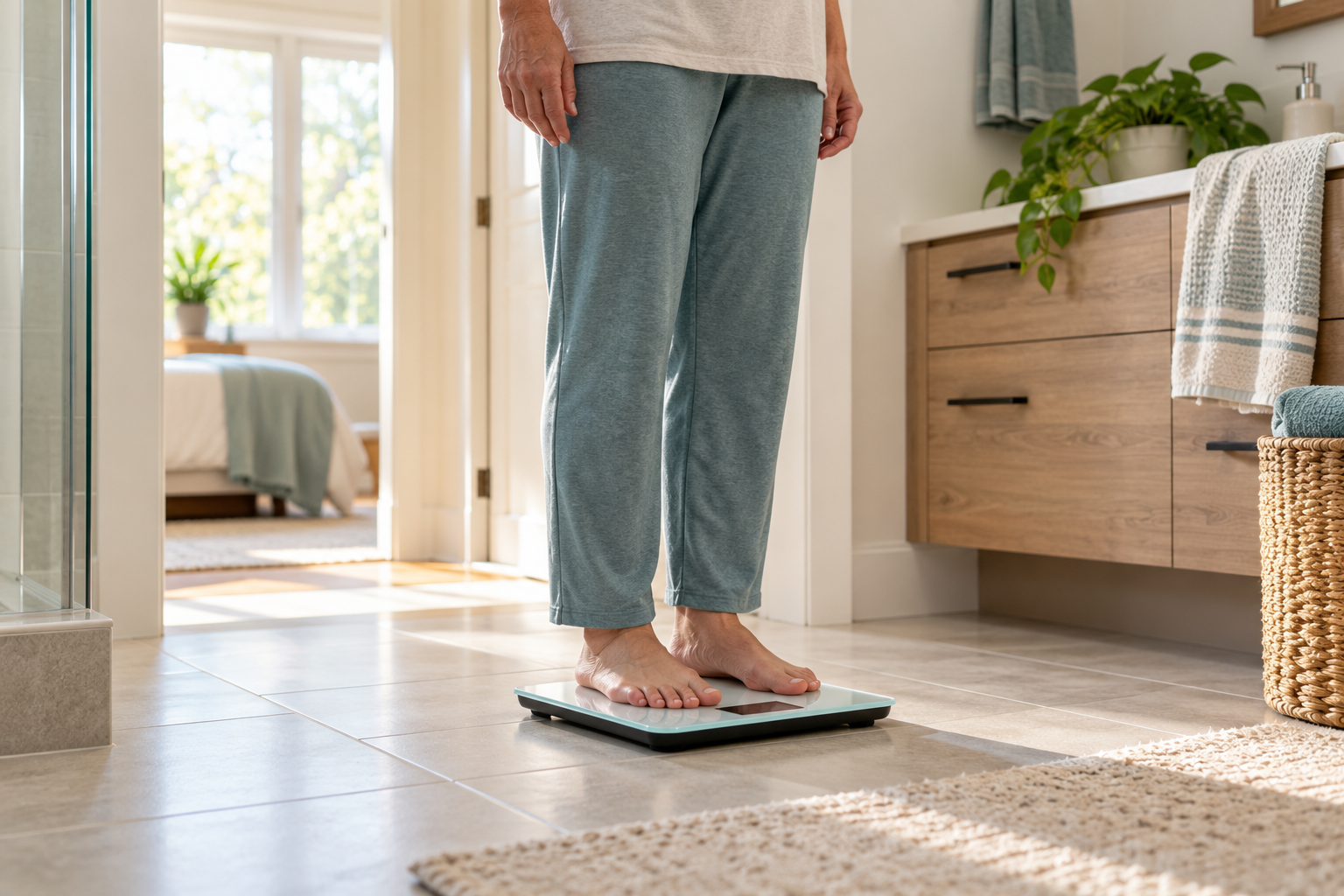
Lasix is a loop diuretic that helps the body remove salt and water. A quick scale change can reflect fluid balance, dehydration, or another health issue rather than fat loss. If you take furosemide for heart failure, follow your care team’s weight-monitoring plan and ask what change should trigger a call. Do not increase, skip, or share the medicine to change your weight.
People often search “Lasix weight loss” after seeing the scale drop quickly or hearing that a diuretic can make someone look leaner. That description is misleading. Furosemide increases urination and can reduce excess fluid; it does not burn body fat. A sudden decrease may be a treatment effect in someone with fluid retention, but it may also reflect dehydration or another change that needs medical attention.
Lasix is a brand name for furosemide, a loop diuretic prescribed for conditions such as edema and high blood pressure. In heart failure, it may help relieve fluid buildup, but it does not cure the underlying heart condition. The appropriate dose and monitoring depend on the reason it was prescribed, kidney function, other medicines, symptoms, and the clinician’s treatment goals.
Fluid weight and body fat are not the same
Scale weight includes water, food and drink in the digestive system, clothing, and body tissues. A diuretic can change the water component over a short period. Body fat changes through a different process and cannot be inferred from a one-day scale drop. If weight changes rapidly after a diuretic, the number does not reveal whether the change is helpful, excessive, temporary, or unrelated.
People with heart failure may retain fluid when the body is not moving it effectively. That can show up as weight gain, swelling, or worsening shortness of breath. A diuretic may help reduce the extra fluid, and the care team may ask for daily weights to detect a trend. In that context, the scale is a monitoring tool—not a measure of dieting success.
| Scale pattern | Possible explanation | What to do |
|---|---|---|
| A quick drop after starting or adjusting a prescribed diuretic | Could reflect loss of retained fluid, but may also signal excessive fluid loss or another issue. | Follow the clinician’s plan and report symptoms or changes beyond the agreed range. |
| A rapid increase over a day or several days | May reflect fluid retention, but food, scale conditions, and other causes also affect weight. | Use the personal action plan; contact the care team at its specified threshold. |
| Weight change with swelling or increasing breathlessness | Fluid status may be changing and symptoms need clinical interpretation. | Call the care team promptly; emergency help for severe breathing difficulty or chest pain. |
| Weight drop with thirst, weakness, faintness, or very little urination | Could indicate dehydration, low blood pressure, or a kidney/electrolyte concern. | Seek medical advice promptly; urgent care for severe symptoms. |
| Gradual change over weeks with stable symptoms | May reflect changes in body tissue, diet, activity, or fluid, among other causes. | Discuss the pattern at follow-up rather than adjusting furosemide yourself. |
The table cannot diagnose the cause of a weight change. A clinician may consider symptoms, blood pressure, laboratory tests, kidney function, and the reason for taking the medicine. The number alone is not enough to decide whether a diuretic dose is right.
Why heart-failure teams ask about daily weight
For some people with heart failure, a change in weight can be an early clue that fluid is building up. The American Heart Association advises tracking weight and following the care team’s plan; common patient education uses thresholds such as a gain of 2–3 pounds in a day or 5 pounds in a week as a reason to contact the healthcare professional. Those numbers are not a universal self-treatment rule. Your clinician may give a different threshold based on your body size, condition, and plan.
To make a trend more meaningful, teams often recommend using the same scale, at a consistent time, with similar clothing, and recording the number. Ask your clinician whether they want you to weigh before breakfast, after using the bathroom, or under another specific routine. Consistency helps separate a trend from ordinary variation.
Ask in advance what to do if the weight crosses your threshold. Some patients have a written action plan; others are told to call before any change. Do not assume that a previous hospital instruction still applies after your condition or medicines change. Keep the current plan accessible to family or caregivers if they help with monitoring.
Why a lower number can still be a concern
Too much fluid loss can cause dehydration, low blood pressure, dizziness, weakness, fainting, changes in kidney function, or electrolyte problems. Furosemide can affect minerals such as potassium and sodium. These risks do not mean the medicine is inappropriate; they explain why clinicians may order blood tests and ask about symptoms after starting or changing treatment.
Contact the prescriber if you have persistent dizziness, unusual weakness, muscle cramps, confusion, or a major change in urination. Seek urgent help for fainting, severe confusion, chest pain, trouble breathing, or a person who is difficult to wake. Severe symptoms need more than a routine scale log.
Do not try to correct a rapid decrease by drinking a large amount of water or adding electrolyte products without advice. People with heart failure or kidney disease may have individualized fluid or sodium instructions. A generic suggestion to “hydrate more” can conflict with the care plan. Ask the clinician what to do for your specific condition.
Do not use Lasix as a weight-loss medicine
Using furosemide to lose body fat is unsafe and does not address fat tissue. A temporary water-weight change can return when fluid balance shifts, and using a prescription diuretic without a medical indication can cause dehydration, low blood pressure, electrolyte changes, kidney injury, or heart rhythm problems. Do not borrow tablets from someone else, use an old prescription, or take extra doses before an event or weigh-in.
Even when a person has a legitimate prescription, changing the schedule to influence appearance or a scale reading can undermine treatment. If weight management is a goal, tell the clinician. They can discuss appropriate options and check whether a change in body weight might be related to fluid, medication effects, or another health issue.
What to record and report
A short log can help the clinician interpret a trend. Record the date and time, weight, whether the same scale was used, swelling, breathlessness, dizziness, medication timing, and any missed doses. Do not spend time making the chart perfect; report severe symptoms immediately rather than waiting to collect more data.
- Use the same conditions. Follow the care team’s directions for time of day, clothing, and scale.
- Track symptoms with the number. Note swelling, breathlessness, cough, dizziness, thirst, and urine changes.
- List recent medicine changes. Include NSAIDs, blood-pressure medicines, supplements, and missed doses.
- Use the personal threshold. Call at the number your clinician gave you, even if a generic online threshold differs.
- Ask for a written action plan. Clarify exactly whom to call and whether any dose change is ever authorized.
If you are seeing a number change but feel well, still follow the plan the clinician gave you. If there is no plan, ask for one at the next contact rather than choosing a threshold from a website. If you have worsening shortness of breath, swelling, or chest symptoms, call sooner.
Questions to ask about Lasix and weight
- Why am I taking furosemide, and what symptom or measurement are we treating?
- What is my personal weight-gain threshold for calling?
- Should I weigh daily, and how should I do it consistently?
- Which symptoms might mean too much fluid loss or a kidney/electrolyte problem?
- When should my blood tests or kidney function be checked?
- What should I do if I miss a dose or cannot reach the clinic?
Bring a current medication list, especially if another clinician recently added or changed a blood-pressure medicine, pain reliever, or supplement. Some medicines can affect fluid balance or kidney function. Do not stop another prescription to compensate for a weight change without speaking to the prescriber.
For more on furosemide safety, see our existing Lasix side-effects guide. If you are checking blood pressure at home, our measurement guide explains how to make readings more consistent. Those topics are related to monitoring but do not replace a personalized heart-failure plan.
Scale technique can prevent false alarms
A single reading can be noisy. Different scales, floor surfaces, clothing, meals, bowel movements, and time of day can all shift the number. If the care team asked you to monitor weight, use the method they recommended and focus on the trend. Avoid comparing a morning measurement on one scale with an evening measurement on another as though they were exact equivalents.
If the scale seems inconsistent, check that it is on a firm level floor and ask the clinic whether it needs to be replaced. People who cannot safely stand on a scale should tell the care team rather than risking a fall. A caregiver may help record a reading if the patient agrees and it can be done safely.
Keeping symptoms alongside weight is important because a number that is meaningful for one person may be less informative for another. The clinician can explain whether to call for a rapid change even when other symptoms are absent, and what to do if swelling or breathlessness occurs at a lower weight.
Bottom line
Lasix can lower scale weight by helping remove fluid, but that is not fat loss. A sudden change may be clinically important, especially for people with heart failure or kidney disease. Track weight consistently if instructed, follow your personal call threshold, and report symptoms such as swelling, breathlessness, dizziness, fainting, or major urine changes. Never increase, skip, or borrow furosemide to change a number on the scale.
Sources and further reading
- MedlinePlus: Furosemide
- American Heart Association: Managing heart-failure symptoms and weight changes
- American Heart Association: Medicines used to treat heart failure
- DailyMed: Current furosemide labeling
Evidence checked October 20, 2026. General information only; do not alter a prescribed diuretic schedule.