
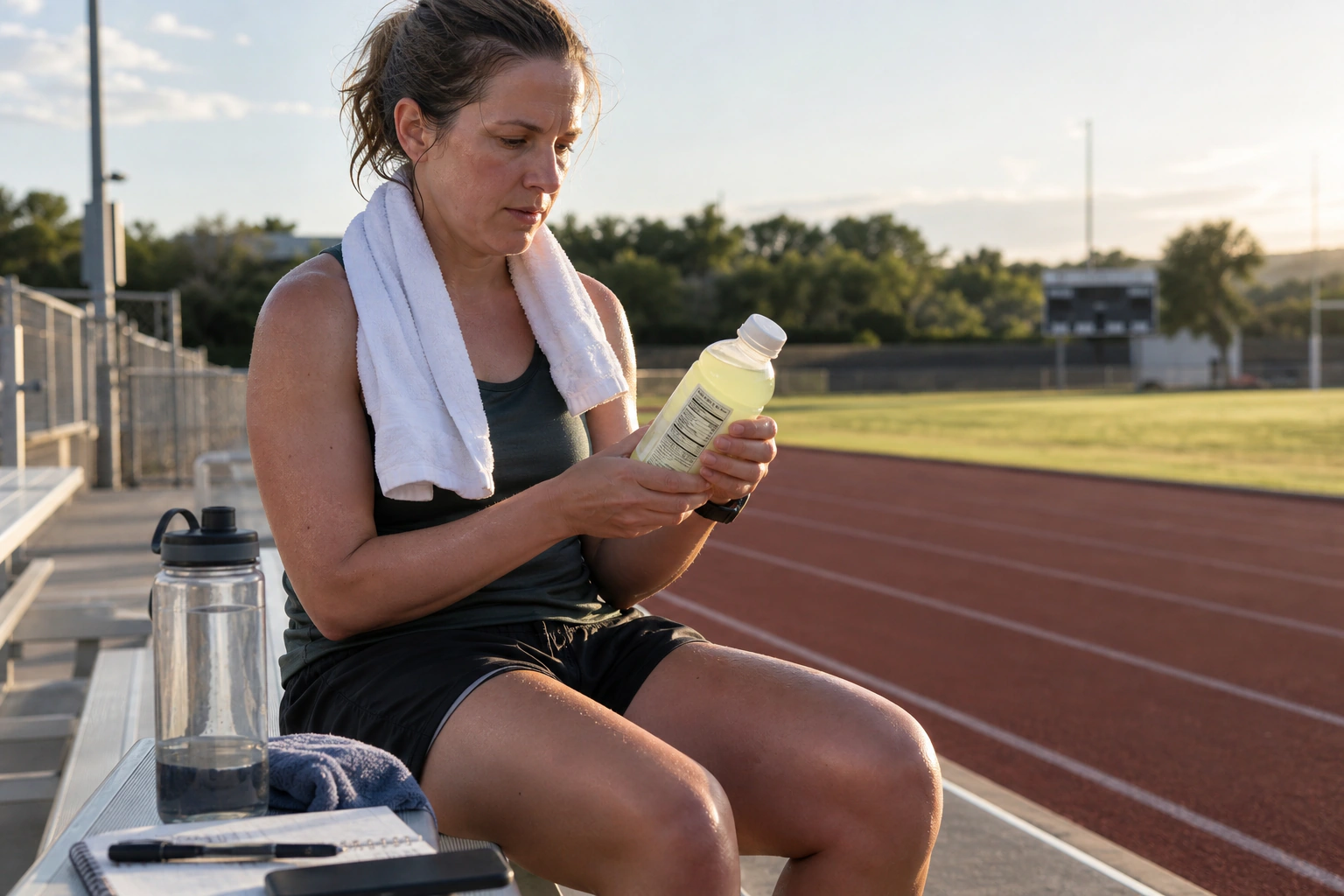
Electrolytes are essential. That does not mean everyone needs an electrolyte drink every day. For most ordinary routines, food and water maintain balance. The useful decision is based on fluid loss, duration and intensity of activity, climate, illness, medicines, and medical conditions—not on whether a packet is labeled “hydration.”
A quick decision screen
- Water is usually enough for short, moderate activity and daily life.
- Prolonged heavy sweating, heat work, or significant vomiting and diarrhea changes the plan.
- Sodium in drinks counts toward total sodium intake.
- Potassium-heavy products can be dangerous with kidney disease or certain medicines.
- Sports drinks and oral rehydration solutions are not interchangeable.
Start with the situation, then choose the drink
Sodium, potassium, chloride, magnesium, and calcium help regulate fluid balance, nerves, and muscles. The kidneys and hormones continually adjust how much water and electrolyte the body retains or excretes. A normal diet supplies these minerals for most people.
Sweat contains water and sodium, with smaller amounts of other electrolytes. Loss varies greatly by person, heat acclimatization, clothing, environment, and effort. A salty residue on clothing suggests higher sodium loss but does not produce a precise replacement prescription.
| Situation | Usually reasonable starting point | Why the plan may change |
|---|---|---|
| Desk work and normal meals | Drink to thirst; ordinary food | Medical fluid restrictions or illness |
| Easy workout under about an hour | Water is commonly sufficient | Extreme heat or unusually heavy sweating |
| Long endurance or heat work | Individual fluid, sodium, and fueling plan | Sweat rate, pace, duration, and conditions |
| Vomiting or diarrhea | Appropriate oral rehydration solution when indicated | Age, severity, underlying disease, inability to drink |
| Hangover | Time, fluids, food as tolerated | Electrolytes do not reverse alcohol toxicity |
Vomiting or diarrhea: oral rehydration solution is different
Oral rehydration solution uses a specific balance of glucose and sodium to support absorption during diarrheal illness. A sweet sports drink, zero-sugar electrolyte water, coconut water, and a medical oral rehydration product have different compositions and purposes. Substituting one for another can deliver too much sugar, too little sodium, or too much potassium.
For a child, older adult, or person with significant illness, use professional guidance and the correct product. Homemade recipes must be measured accurately; too much salt can be dangerous. Persistent losses, blood in stool, severe pain, or signs of dehydration need assessment.
Daily packets: count the label, not the halo
Add the sodium per serving to food and other drinks. Some packets contribute a meaningful share of the general daily sodium limit before any meal is counted. People with high blood pressure, heart failure, kidney disease, swelling, or a prescribed sodium or fluid plan should not add daily packets casually.
Conversely, a person with a clinician-directed high-sodium plan for a specific condition should follow that plan, not generic restriction advice. The word “electrolyte” does not reveal whether a product fits either situation.
Kidney disease and medicines: potassium deserves respect
Potassium is essential, and diets rich in potassium-containing foods support health for many people. Concentrated supplemental potassium is different. Kidney disease and medicines such as ACE inhibitors, ARBs, potassium-sparing diuretics, and some other drugs can raise potassium, sometimes dangerously.
Do not use a high-potassium powder to treat cramps or fatigue without understanding the cause. Weakness, palpitations, or an abnormal laboratory result needs proper evaluation; symptoms cannot tell whether potassium is high or low.
Underdrinking and overdrinking can both harm
Dehydration can reduce performance and cause thirst, dizziness, headache, rapid pulse, and low urine output. But drinking water far faster than the body can excrete it can dilute blood sodium, especially during long events. Exercise-associated hyponatremia can cause nausea, headache, confusion, seizure, and death.
“Drink as much as possible” is not a safe universal instruction. Endurance athletes should use an event-specific plan based on experience, conditions, and reputable sports-medicine guidance. Body-weight change across training can help estimate net fluid loss, but it is not a reason to replace every gram immediately.
A practical label audit
- Confirm the serving size and number of servings in the container.
- Record sodium, potassium, carbohydrate, caffeine, and other active ingredients.
- Ask whether the product is for everyday flavor, exercise fueling, or illness rehydration.
- Add food sodium and any second serving.
- Review medicines and kidney, heart, or blood-pressure conditions.
- Set the circumstances for use rather than making it automatic.
Cramps are not an electrolyte test
Exercise cramps can involve fatigue, neuromuscular factors, conditioning, heat, and fluid or sodium loss. A cramp does not identify which electrolyte is missing. Repeated cramps deserve a review of training load, environment, medicines, and other symptoms.
Muscle twitching, weakness, or palpitations outside exercise can have many causes. Avoid stacking magnesium, potassium, and sodium while waiting for a self-diagnosis. Large combined doses can create the problem you are trying to solve.
Medicines and sick-day context
Diuretics change water and electrolyte handling, but different classes move potassium in opposite directions. Some antidepressants and seizure medicines can contribute to low sodium. Laxatives can increase losses. Diabetes medicines and kidney disease can change the response to dehydration.
If vomiting, diarrhea, fever, or heat exposure occurs while you take medicines that affect blood pressure, kidneys, glucose, or fluid balance, ask for a specific sick-day plan. Do not independently stop essential medicines or double electrolyte products.
Use a product only when the job is clear
An electrolyte drink can be useful during prolonged vigorous exercise, heavy sweating in heat, or selected illness. Its success should be judged by tolerability, ability to drink, symptoms, and performance—not by a vague feeling that plain water is “not absorbed.” Water is absorbed.
If the purpose is simply to make water more appealing, choose a product whose sodium, sugar, caffeine, cost, and dental exposure fit daily use. Flavor can improve drinking, but it does not require medical claims.
A hot-work example
A landscaper working for hours in humid heat has different needs from someone doing a thirty-minute indoor class. Start with workplace heat protections: acclimatization, shade, rest breaks, accessible cool fluid, and early symptom recognition. An electrolyte packet cannot compensate for unsafe workload or lack of cooling.
Record shift length, weather, clothing, breaks, fluid consumed, urine and symptoms, and body-weight change only when it can be measured safely and consistently. A clinician or occupational-health team can help when dizziness, cramps, kidney problems, or medicines complicate the plan. Never tell a worker to continue through confusion because a drink contains sodium.
An endurance example
A runner preparing for a long event should test fluid and fueling during training, not on race day. The plan accounts for duration, pace, heat, sweat rate, aid-station spacing, and stomach tolerance. Drinking ahead of thirst to meet an aggressive hourly target can be as dangerous as ignoring fluid completely.
Post-event weight gain, headache, nausea, puffy hands, and confusion can signal overdrinking and low sodium rather than dehydration. This requires urgent medical assessment; taking extra salt without evaluation is not a safe diagnosis. Event medical teams need the volume and timing of fluid and products consumed.
Everyday fatigue is not an electrolyte diagnosis
Fatigue can come from sleep loss, anemia, infection, mood, thyroid disease, medication effects, inadequate calories, or many other causes. A salty drink may feel energizing because it is flavored, cold, sweetened, or caffeinated. That response does not prove a deficiency.
If daily use seems necessary to function, review the pattern rather than escalating. Note blood pressure, thirst, urination, diet, bowel losses, exercise, and medicines. A basic clinical history can be more informative than repeatedly changing powder ratios.
Work through the numbers on one label
Imagine a packet that supplies 1,000 mg of sodium and is mixed into a bottle of water. The U.S. general recommendation for teens and adults is less than 2,300 mg of sodium daily as part of a healthy eating pattern. That packet supplies about 43% of the reference amount before food is counted. Two packets supply about 87%. These percentages do not establish what a heavily sweating athlete needs, but they make an automatic daily routine easier to evaluate.
Check whether the nutrition panel reports one packet, half a packet, or a prepared volume. Adding extra water makes the drink less concentrated, but drinking the entire bottle still delivers the same sodium amount. Adding half the powder changes the amount, yet guessing half by eye may be unreliable. Do not improvise dilution with an oral rehydration product: mix the whole packet with the exact water volume on its directions unless that product explicitly provides another method.
Next check carbohydrate and caffeine. Carbohydrate can be purposeful fuel during prolonged exercise, while caffeine can explain why a drink seems stimulating. Neither proves that an electrolyte deficiency existed. If you use a separate gel, energy drink, pre-workout product, or salty snack, include it in the same record. The useful comparison is the complete intake over the activity or day, not which front label sounds most scientific.
A workplace plan is different from a race plan
For moderate work in the heat lasting less than two hours, NIOSH gives a practical starting point of one cup of water every fifteen to twenty minutes. It recommends balanced electrolyte drinks when sweating continues for several hours and says fluid intake generally should not exceed six cups per hour. This is occupational guidance within a heat-protection program, not a universal target for every person or an instruction to drink up to the ceiling.
A worker also needs permission and access to stop, cool down, and report symptoms. A supply of packets does not replace shade, acclimatization, rest, or an emergency plan. People with prescribed fluid restrictions or medicines affected by heat need individual instructions. A recreational runner, meanwhile, must account for pace, event duration, stomach tolerance, and the risk of overdrinking. Copying the worker’s hourly schedule into a race can miss those differences.
After any difficult session, document what happened before changing the mixture. Record the weather, duration, approximate drinks, food, medicine use, symptoms, and recovery. If you felt dizzy while standing after stopping, say when it started and whether it resolved; if you became confused during exertion, that is an emergency concern rather than a recipe problem. A clinician can use the history to decide whether electrolytes, heat illness, blood pressure, glucose, or another cause needs assessment.
For ordinary days, let the decision remain simple. Keep water available, eat regular meals, and use any medically prescribed sodium or fluid plan. If a packet is only a flavor preference, calculate its daily contribution and cost honestly. It does not need to be described as treatment to be enjoyable.
Sources and evidence scope
Do not use a generic hydration article to manage a diagnosed sodium or potassium disorder. Laboratory abnormalities require confirmation and a cause-focused plan. A product that helped during one heat event may be wrong during an illness, a shorter workout, or after a medicine change.
Sports-hydration evidence cannot be converted into one universal packet-per-hour rule. Sweat composition and safe intake vary, and conditions can change during an event. Medical oral rehydration advice also differs from routine sports use. When kidney, heart, endocrine, or blood-pressure disease is present, individualized guidance should replace internet recipes.
This guide uses CDC information on sodium and health, the ACSM position stand on exercise and fluid replacement, WHO guidance on oral rehydration salts, and current NIOSH workplace heat recommendations. The packet example is illustrative. Workplace hydration guidance, endurance-event planning, and illness treatment have different purposes and should not be treated as interchangeable prescriptions.