
You picked up your doxycycline and the tablets look different, the label says “monohydrate” where it used to say “hyclate,” and the bottle has a new maker. The short version: it is the same antibiotic, delivered as a different salt or in a different release form. The longer version explains where the difference can matter.
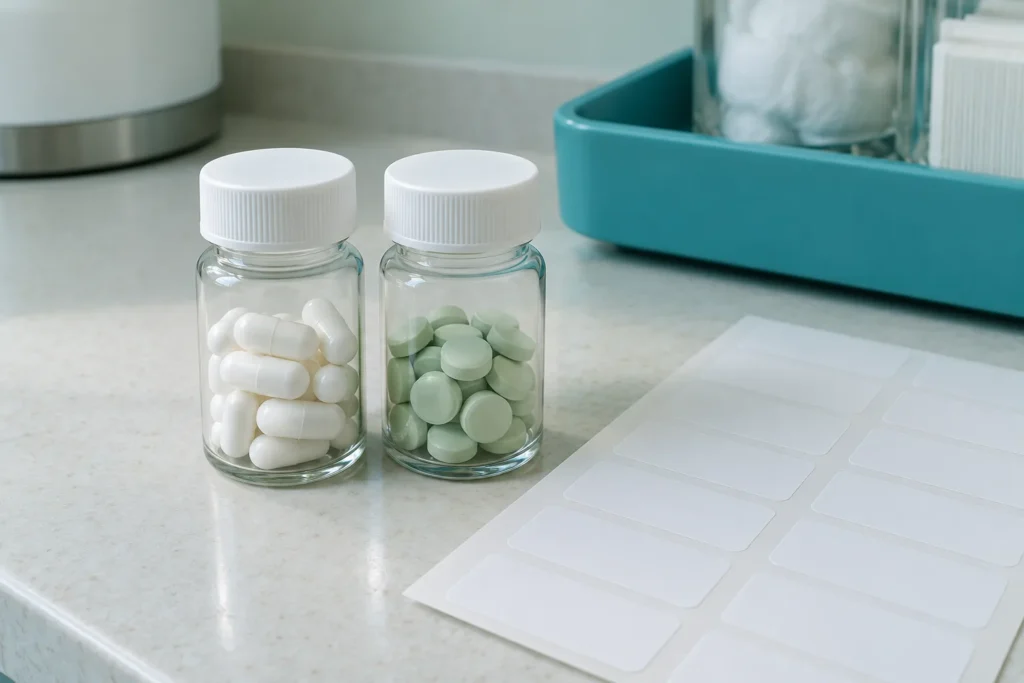
Doxycycline hyclate and doxycycline monohydrate both release the active drug, doxycycline. The labels express each strength as the amount of doxycycline it is equivalent to, so a “100 mg” tablet of either contains the equivalent of 100 mg of doxycycline. What can differ is solubility, coating, release pattern and inactive ingredients. Delayed-release and low-dose products are different formulations and are not mg-for-mg substitutes.
What the labels say about the two salts
The doxycycline hyclate label on DailyMed describes tablets that “contain doxycycline hyclate equivalent to 50 mg or 100 mg doxycycline.” The doxycycline monohydrate tablet label says its tablets “contain doxycycline monohydrate equivalent to” the stated strength of doxycycline. In the chemistry section the hyclate label states that doxycycline hyclate is soluble in water, while doxycycline monohydrate is very slightly soluble in water.
That solubility difference is the main chemical fact about the salts. Whether it changes how a given person feels after a dose is a separate question, and the labels do not claim it does. Both documents carry the same class warnings: take with adequate fluid to reduce the risk of esophageal irritation and ulceration, absorption of tetracyclines is reduced by foods containing calcium but doxycycline is “not markedly influenced” by simultaneous food or milk, and if gastric irritation occurs it may be taken with food or milk.
The stomach-tolerance claim, honestly
A common line online is that hyclate is harsher on the stomach and monohydrate gentler. We did not find a direct head-to-head comparison in the primary sources we opened, and neither label makes that claim, so we cannot present it as established. What the sources do support is narrower: nausea, vomiting and esophageal irritation are listed adverse effects for the class; formulation affects how food changes absorption (a 2023 review in Antibiotics noted that the impact of food on doxycycline absorption varied with dosage form); and many people tolerate one product better than another for reasons that can include fillers, tablet size or simply being taken with more water. If one product upsets your stomach and another does not, that is useful information to give your prescriber, not proof of a salt effect.
| Question | What the labels and sources support |
|---|---|
| Is the active ingredient the same? | Yes. Strengths are expressed as doxycycline equivalents for both salts. |
| Are the approved uses the same? | The hyclate label lists a broad range of infections, including tick-borne rickettsial infections, chlamydial urethral infection and others when susceptibility is appropriate; the monohydrate tablet label is a doxycycline antibacterial label in the same class. Specific indications can vary by product, so check the label of the exact product. |
| Which one is easier on the stomach? | Not established by the labels. Taking with food or milk when irritated is allowed in both; esophageal precautions apply to both. |
| Do they need different timing with dairy or iron? | Both labels warn that tetracycline absorption can be reduced by calcium-containing foods and by antacids, iron and similar products; see our guide to doxycycline with food, dairy and sun. |
| Can I split a hyclate and a monohydrate tablet to match a new strength? | Do not adjust on your own. Ask the pharmacist; some tablets are film-coated or delayed-release and must not be split or crushed. |
When the formulation really does matter
The salt names are the least important part of the label. The forms below differ in ways that change how they are used.
Delayed-release hyclate tablets
The label for Doryx MPC (doxycycline hyclate delayed-release tablets) tells patients not to chew or crush the tablets, and describes a 120 mg tablet that was bioequivalent under fasted conditions to the older Doryx 100 mg tablet. Same drug, but the milligram number on the box is not the same as an immediate-release tablet’s, which is why substituting between products requires the prescriber or pharmacist.
Low-dose capsules for rosacea
The Oracea label describes a 40 mg capsule containing beads (30 mg immediate release and 10 mg delayed release) and is indicated only for inflammatory lesions of rosacea in adults. It states that this formulation “has not been evaluated in the treatment or prevention of infections” and should not be used for bacterial infections. It also directs once-daily use in the morning on an empty stomach, which is the opposite of the advice for upset stomach with other products. A switch between Oracea and an antibiotic-strength doxycycline is therefore a change in purpose, not a pharmacy substitution.
Capsules vs. tablets
Capsule forms are associated in the labels with esophagitis and esophageal ulceration reports, and the monohydrate label notes that these have been reported with capsule and tablet forms of the class. Swallowing with a full glass of water and not lying down right after dosing are consistent across labels. Our article on doxycycline and throat pain covers that routine.
Different manufacturers make different-looking tablets of the same drug. A new color, shape or imprint is expected after a refill from a different supplier. The check is on the label: the drug name, salt, strength in mg and directions should match the prescription. If anything is unclear, ask the pharmacist before the first dose of the new bottle.
Cautions that apply to every doxycycline product
Whatever the salt or release form, the class warnings are the same. The labels state that use of tetracycline-class drugs during tooth development, meaning the last half of pregnancy, infancy and childhood to the age of 8 years, may cause permanent discoloration of the teeth, and that in pediatric patients 8 years of age or less doxycycline should be used only when the potential benefits are expected to outweigh the risks in severe or life-threatening conditions. That is why an old bottle should not be handed to a child or a pregnant relative. The labels also list photosensitivity and the esophageal precautions already described, and they say doxycycline should be used only to treat or prevent infections that are proven or strongly suspected to be caused by susceptible bacteria.
Why so many strengths exist
The monohydrate tablet label describes 50 mg, 75 mg, 100 mg and 150 mg tablets, each expressed as the equivalent of doxycycline, while the hyclate label describes 50 mg and 100 mg tablets and capsules and a delayed-release product exists in other strengths. A pharmacist may supply a different strength to match the total your prescriber ordered, for example two smaller tablets instead of one larger. That is a legitimate change if the total matches the prescription, and it is also the situation in which mistakes occur if you read the number on one tablet and not the instructions. When a refill looks different, check the instructions line on the label and ask the pharmacist to walk through it.
Can I take the old and the new bottle together?
No, not unless the prescriber or pharmacist says to. Taking two bottles of the same drug is a duplication, whatever the salt names say. If you have leftovers from an earlier course, ask about disposal rather than combining them; the CDC advises talking to a pharmacist about safely discarding leftover antibiotics. For how doxycycline is used and when it is not appropriate, see what doxycycline is used for.
Why two labels for one drug can look different
DailyMed holds a separate label for each manufacturer and repackager, with its own version date. Two doxycycline hyclate labels can differ in inactive ingredients, tablet descriptions and wording updates, and a repackager’s label may lag the original. The leaflet in your own box and the pharmacist’s printout are the version that applies to your tablets. If you compare an online page with your bottle, check the manufacturer name and the imprint on the tablet before assuming a difference in the drug.
What to ask the pharmacist
- Is this the same drug and strength as my last fill, and why did the form change?
- Is this immediate-release or delayed-release, and can it be split or crushed?
- How should I take it relative to food, dairy, iron, calcium or antacids?
- If I had stomach upset or throat pain with the last version, is there a reason to expect a difference?
- Does the strength match my prescription written in mg of doxycycline?
If you are choosing between brands because of side effects
Tell the prescriber what happened, when it started relative to the dose, and what you took it with. The general list of effects in doxycycline side effects includes the sun sensitivity and stomach upset that people attribute to the salt. Sun sensitivity, for example, is a class effect of doxycycline regardless of salt; see antibiotics and sun sensitivity for the broader picture. The practical route is to compare notes with the pharmacist and let the prescriber decide whether a different product or a different plan is warranted. Do not stop an antibiotic course midway because the tablets look different.
Sources
- DailyMed: Doxycycline hyclate tablets and capsules label
- DailyMed: Doxycycline monohydrate tablets label
- DailyMed: Doryx MPC (doxycycline hyclate delayed-release tablets) label
- DailyMed: Oracea (doxycycline) capsules label
- PubMed: Oral tetracycline-class drugs in dermatology, impact of food intake (Antibiotics, 2023)
Evidence checked October 30, 2026. General information only; do not change or stop an antibiotic without your prescriber.