
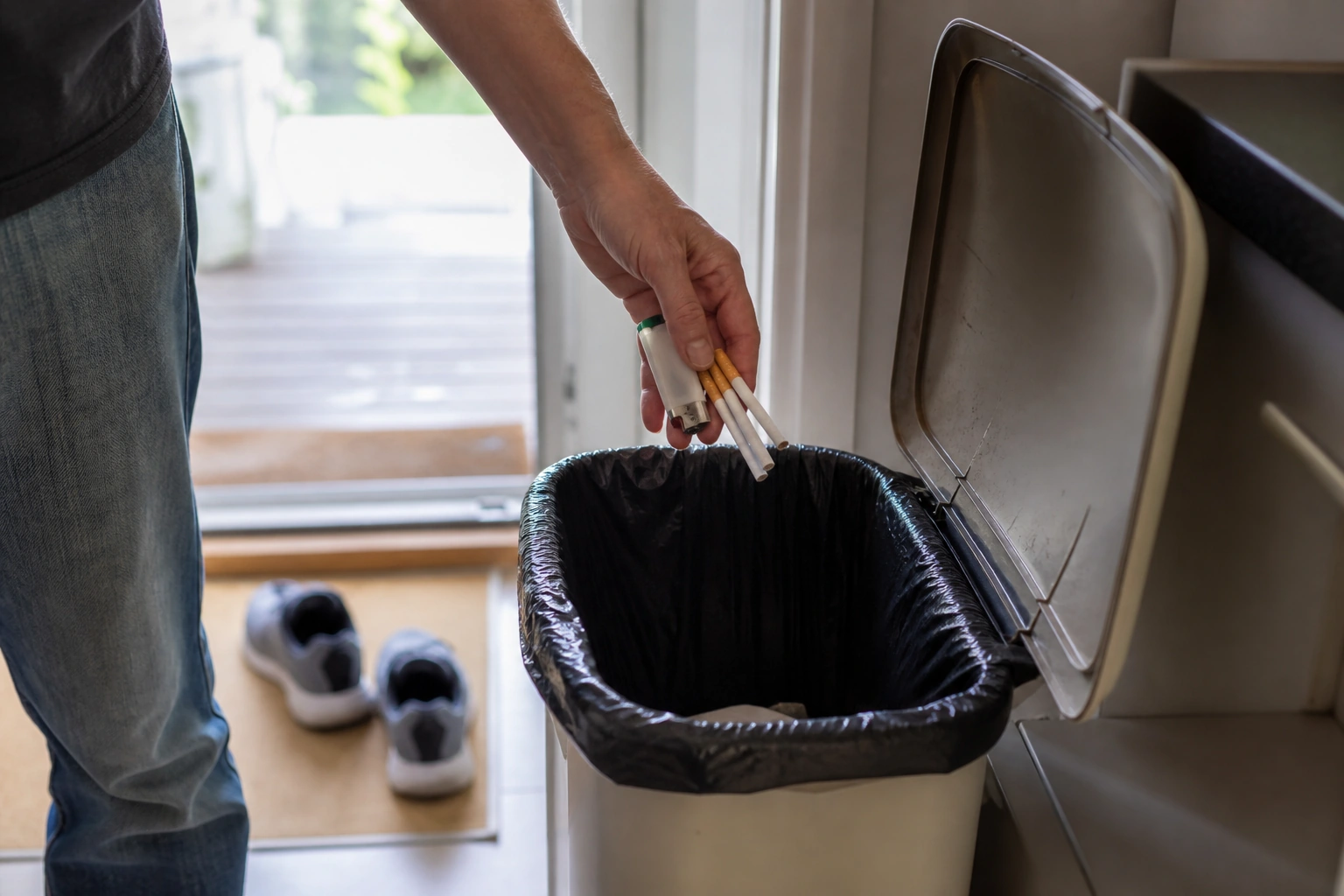
Quitting smoking is not a test of character. Nicotine changes reward and withdrawal systems, while cigarettes become tied to routines, stress, social contact, and identity. The most effective plan treats both parts: behavioural support for habits and triggers, plus an evidence-based medicine when appropriate. A lapse is information to use, not proof that quitting is impossible.
Key points
- Quitting benefits health at any age and after any amount of smoking.
- Counselling and cessation medicine together offer the strongest chance of long-term success.
- Prepare the environment, support, and response to cravings before the quit day.
- Choose treatment with a clinician or pharmacist based on health, other medicines, pregnancy, age, preference, and previous attempts.
- If you smoke one cigarette, interrupt the sequence immediately and revise the plan rather than abandoning it.
Start with a reason that belongs to you
Health may be the main reason: breathing, heart risk, cancer risk, fertility, pregnancy, recovery from surgery, or protecting other people from smoke. Other reasons are equally usable—money, freedom from planning the next cigarette, taste and smell, fitness, appearance, pets, or setting a different example for children.
Write two or three reasons in your own language and keep them where a cigarette is usually stored. Avoid vague slogans. “I want to walk upstairs without stopping” or “I want mornings to belong to me, not the first cigarette” can guide a decision during a craving.
CDC reports that benefits begin after the last cigarette and continue for years. Heart rate falls within minutes, blood carbon monoxide falls over days, and risks of heart disease, stroke, lung disease, and several cancers decline over time compared with continuing to smoke. Quitting does not erase every risk, but it changes the direction.
Step 1: Map the smoking pattern
For several ordinary days, record each cigarette, the time, situation, urge strength, and what it seemed to provide. Common patterns include waking, coffee, driving, work breaks, after meals, alcohol, conflict, boredom, concentration, and being with particular people.
Notice dependence clues: smoking soon after waking, waking at night to smoke, strong symptoms when delayed, or smoking even when ill. Also note “automatic” cigarettes that were barely enjoyed. The record is not a scorecard. It identifies where treatment and replacement routines will do the most work.
Include every tobacco and nicotine product. Cigars, waterpipe, roll-your-own tobacco, smokeless tobacco, heated tobacco, and e-cigarettes create different exposure patterns. A plan built only around cigarette count can miss a second source of nicotine.
Step 2: Choose a route and a target date
Many people choose a quit date within the next few weeks and stop cigarettes on that day. Others use a structured reduction leading to a definite stop. Gradual reduction should not become an indefinite lower number with the same smoking cues. A quit service can help choose a route based on previous experience and confidence.
Select a date that allows preparation and access to treatment, not a mythical stress-free week. Avoid placing it in the middle of travel or a predictable crisis if another date is available. Tell supportive people what will help and what will not. “Walk with me after dinner” is more useful than “make sure I don’t smoke.”
Step 3: Add behavioural support
WHO recommends brief advice from healthcare workers and, for people who want it, more intensive individual, group, or telephone counselling. Text messaging, apps, and internet programmes can add support. CDC likewise advises that counselling plus medicine gives people the best chance of quitting.
Support is practical. A counsellor helps identify triggers, rehearse responses, set up the environment, manage withdrawal, and recover from lapses. Quitlines can provide repeated contact without travel. In the United States, 1-800-QUIT-NOW routes callers to a state quitline; other countries have their own services.
Choose a programme that protects privacy, explains evidence and cost, and does not guarantee success. Digital tools should support a plan rather than create shame through broken streaks or sell unverified supplements.
Step 4: Discuss treatment options
Cessation medicines reduce cravings or withdrawal and can make it easier to practise new routines. Options include nicotine replacement in long-acting and short-acting forms and non-nicotine prescription treatments. Guidelines differ slightly by country because licensing and availability differ.
Nicotine replacement provides nicotine without combustion and the thousands of chemicals in cigarette smoke. A long-acting form provides a steadier background level; a short-acting form is used for breakthrough urges. Evidence supports combining long- and short-acting forms for many adults, but the correct product, strength, and instructions depend on smoking pattern and health context.
Prescription options act on nicotine-related brain pathways or craving. They have different start times, contraindications, interactions, and adverse effects. This page does not rank or select one. A clinician or pharmacist should consider kidney function, seizure history, mental health, pregnancy, breastfeeding, other medicines, and previous response.
People under 18 and people who are pregnant or breastfeeding need age- or maternity-specific guidance. Do not borrow someone else’s medicine. Contact the prescriber promptly for serious mood change, allergic symptoms, or another concerning reaction.
Smoking cessation can change levels of other medicines
Chemicals in tobacco smoke—not nicotine alone—can speed the breakdown of some medicines. When smoking stops, levels may rise and side effects can appear. NICE identifies certain psychiatric, respiratory, and blood-thinning medicines as examples requiring monitoring.
Give the prescriber and pharmacist an accurate quit date and tell them if smoking restarts. Do not pre-emptively change those medicines yourself. The same review matters if someone switches from smoking to a non-combustible nicotine source because smoke exposure has changed.
Step 5: Redesign the environment
Remove cigarettes, lighters, ashtrays, and hidden emergency packs from the home, car, and work bag. Wash smoky clothes and clean the car if possible. Ask people not to offer cigarettes or smoke beside you during the first weeks.
Create a replacement for each high-risk routine. Change the route past the usual shop. Move coffee to a different chair. Stand somewhere else during breaks. Finish a meal by brushing teeth, walking briefly, or calling someone. Keep water and simple oral or hand substitutes available if they help.
Alcohol lowers inhibition and is a powerful smoking cue for many people. Consider avoiding or reducing it during the early quit period. If alcohol dependence is possible, do not stop alcohol abruptly without medical advice because withdrawal can be dangerous.
Step 6: Plan for cravings
A craving rises, peaks, and passes even when it feels permanent. Use a short sequence: delay the decision, change location, breathe at a comfortable pace, drink water, and do a specific activity for a few minutes. Follow the medicine plan if one was agreed.
Separate the urge from the instruction. “I notice a strong urge” is different from “I have to smoke.” Remind yourself that discomfort is expected and temporary. The companion guide Nicotine Withdrawal Timeline, Cravings and Relapse Prevention explains symptoms in more detail.
Hunger, anger, loneliness, and tiredness can amplify urges. Eat regularly, protect sleep, use movement that fits your health, and arrange contact. These steps support treatment; they do not replace counselling or medicine when dependence is strong.
What to expect after the quit day
Irritability, restlessness, poor concentration, sleep change, low mood, increased appetite, cough, and strong urges are common. Symptoms are often strongest early and then ease, but there is no identical timeline. Cues can trigger an urge months later even after physical withdrawal has settled.
Cough may temporarily change as airways clear mucus, but coughing blood, severe breathlessness, chest pain, fainting, or stroke signs need urgent medical assessment. A quitline is not an emergency service. Severe depression or suicidal thoughts also require urgent mental-health or emergency help.
A lapse does not have to become a return to smoking
A lapse is a cigarette or brief episode after the quit date; relapse is a return to the previous pattern. The first cigarette matters because nicotine and cues can reactivate the cycle, but shame makes the next decision harder.
Stop the episode, discard the remaining cigarettes, and contact support. Ask what preceded it: untreated withdrawal, alcohol, an unexpected social cue, conflict, a missed treatment step, or overconfidence after weeks without smoking. Adjust the plan today. Do not wait for another ceremonial quit date.
Many people make several attempts before stopping long term. Previous attempts reveal which situations and treatments need changing. They are not wasted evidence.
If you are not ready to quit today
You can still record patterns, make the home and car smoke-free, ask about treatment, and choose one situation in which not to smoke. Protect other people from secondhand smoke by smoking outside and away from doors and windows; ventilation does not remove the risk.
Keep the conversation open. Brief advice is useful, but pressure, threats, or humiliation can push someone away from care. A healthcare visit is an opportunity to offer support again without withholding other treatment.
Questions people often ask
Is quitting “cold turkey” the best proof of commitment?
No. Some people stop without medicine, but evidence-based treatment and counselling improve the chance of success. Using help is a clinical strategy, not weaker commitment.
Are nicotine medicines as harmful as smoking?
No. The major harms of cigarettes come from combustion and smoke exposure. Nicotine is dependence-forming and treatment still needs correct use, but approved replacement therapy avoids smoke toxins.
Should I switch completely to vaping?
Guidelines and regulation differ by country, and long-term risks are still being studied. Some authorities include regulated nicotine e-cigarettes among options for adults who smoke; US public-health guidance says evidence is insufficient to approve them as cessation medicines. If used, the aim should be to stop combustible smoking rather than maintain dual use, with a later plan for nicotine.
When should I try again after a relapse?
As soon as you can review what happened and restore support. A long delay is not required. A clinician can help change the treatment plan rather than repeat the same attempt.
Sources and evidence scope
This guide was researched using the WHO clinical treatment guideline for tobacco cessation in adults (2024), CDC guidance on how to quit smoking and the benefits of quitting, NICE guideline NG209 (updated February 2025), and the US government quit-plan tool. Sources were checked on August 21, 2026. Treatment licensing, quitlines, e-cigarette regulation, and medicine availability vary by country.